Wearable Device Study Links Inconsistent Sleep Patterns to Higher Risk of Depression and Anxiety
A large study published in Nature Health Sciences reveals that irregular sleep-wake schedules, measured via wearable technology, are strongly correlated with increased symptoms of depression, anxiety, and loneliness.
 🧠Mind & Mental Health
Photo: Nature Health Sciences
Key points
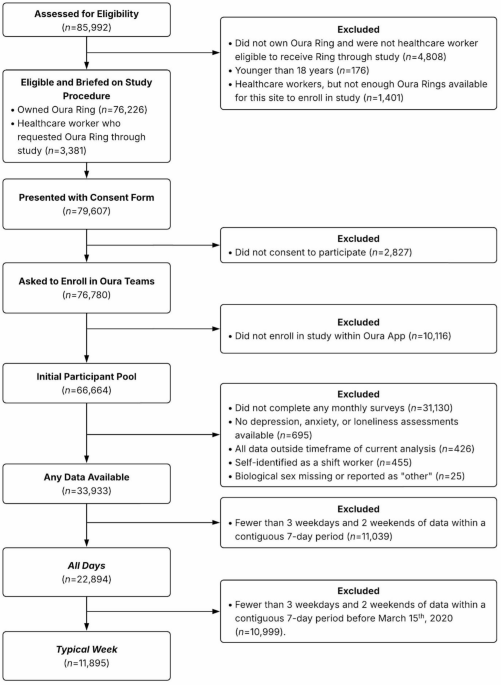
- Study evaluated 22,894 participants in the TemPredict longitudinal cohort.
- Lower Sleep Regularity Index (SRI) scores correlated with greater depression, anxiety, and loneliness.
- Wearable devices offer a reliable, long-term method for monitoring circadian rhythm stability in real-world settings.
A new large-scale longitudinal study published in Nature Health Sciences has found that maintaining an inconsistent sleep schedule is closely linked to elevated symptoms of anxiety, depression, and loneliness. Researchers from the TemPredict Study analyzed data from 22,894 participants to examine how day-to-day variations in rest patterns relate to psychological well-being. By utilizing metrics from wearable devices, the team evaluated the Sleep Regularity Index (SRI), which calculates the likelihood that an individual is in the same state of sleep or wakefulness at any two given times separated by 24 hours, independent of total sleep duration.
Key Findings on Sleep Regularity and Psychological Distress
The investigation demonstrated a graded pattern in which lower sleep regularity corresponded with more severe mental health challenges. Participants experiencing severe depression exhibited a significantly lower mean SRI score of 74.93 compared to 83.74 for those with normal mood levels. Similarly, individuals struggling with severe anxiety or elevated loneliness displayed reduced sleep consistency scores relative to control groups. Logistic regression models further confirmed that every 5-point decrease in the SRI metric corresponded to increased odds of greater symptom severity.
What to know: While the findings highlight a strong connection between routine sleep schedules and mental health, the study relies on observational data and cross-sectional analysis, meaning it cannot definitively prove that irregular sleep directly causes psychological distress. Readers should consult a qualified healthcare professional before making major changes to their personal health or sleep routines.
Source Nature Health Sciences — nature.com/articles/s41598-026-77545-y ↗
Read next
 ❤️Conditions & Care
Papua New Guinean Tree Compound Shows Potential in Motor Neuron Disease Study
Researchers at the University of Wollongong identified a natural compound from a rainforest tree that protected motor neurons against degeneration in laboratory tests.
 🔬Research
Virtual Reality Lowers Pain and Anxiety in Pediatric Emergency Care, Study Finds
A new systematic review and meta-analysis suggests that virtual reality technology can successfully decrease pain and anxiety for children undergoing procedures in hospit…
 🏥Public Health
New Parents with Intellectual Disabilities Face Significantly Higher Rates of Psychiatric Hospitalizations
Recent Australian research reveals that new parents with intellectual disabilities experience drastically elevated rates of emergency room visits and hospital admissions …
 🔬Research
Study Highlights Emotional, Social, and Spiritual Needs in Pediatric Palliative Care
A systematic review published in Palliative Medicine reveals that children receiving end-of-life care require psychological security, maintained social connections, and w…
 🔬Research
Type 2 Diabetes Linked to a 53% Higher Risk of Alzheimer's Disease, Study Finds
A comprehensive meta-analysis led by Curtin University researchers indicates that individuals with type 2 diabetes face a substantially elevated relative risk of developi…
 🔬Research
Brain Imaging Reveals Shared Memory Network in Mild Cognitive Impairment
A new study reveals that diverse areas of cortical thinning in individuals with mild cognitive impairment map to a single shared memory network. Researchers also found th…