Study Identifies Potential Threshold for Physical Activity and Birth Weight
A new study suggests that physical activity levels during late pregnancy may influence neonatal birth weight only after reaching a specific threshold of exertion.
 🔬Research
Photo: Nature Health Sciences
Key points
- Researchers observed a threshold of 218.22 MET-h·wk⁻¹ for physical activity during late pregnancy.
- Activity levels exceeding this threshold were associated with higher neonatal birth weights.
- The study involved 337 pregnant women and highlights the need for larger, independent validation.
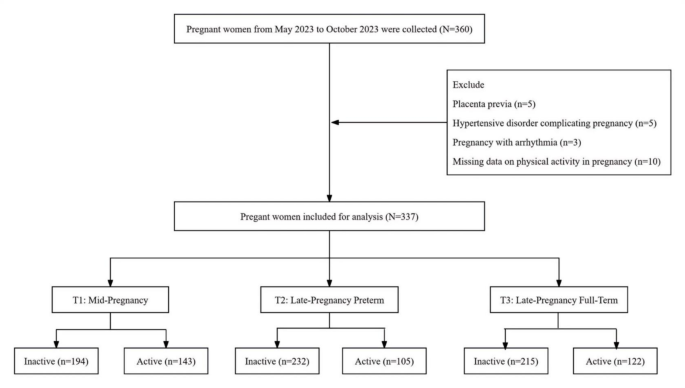
A prospective cohort study conducted at Shenzhen Second People’s Hospital in China has identified a potential threshold effect regarding physical activity during pregnancy and its impact on neonatal birth weight. Researchers analyzed 337 pregnant women, tracking their physical activity levels at three distinct stages of gestation to determine if exercise intensity correlates with the weight of the newborn.
The study utilized generalized additive modeling to evaluate data collected between May and October 2023. Findings indicated that physical activity levels below 218.22 MET-h·wk⁻¹ showed no significant association with birth weight. However, once participants exceeded this specific inflection point during the second trimester, every standard deviation increase in physical activity was linked to an average increase of 544.04 grams in birth weight.
What to know: While this research provides new data on exercise dosage, the findings are based on a relatively small cohort and require validation through larger, independent studies. Because birth weight can be influenced by numerous factors, pregnant individuals should consult with their obstetrician or healthcare provider before making significant changes to their exercise routine.
The study highlights a potential threshold effect in the association between physical activity in late pregnancy and neonatal birth weight, requiring further validation in larger cohorts.
Source Nature Health Sciences — nature.com/articles/s41598-026-70242-w ↗
Read next
 🧠Mind & Mental Health
Addressing Body Image and the Reality of Gluteal Anatomy
A personal reflection on the social and psychological impact of body shape, specifically regarding the gluteal region, and the limitations of consumer solutions for perce…
 ❤️Conditions & Care
Migraine and Smoking Linked to Increased Early Stroke Risk in Women
A large-scale study suggests that people who have given birth and experience migraines while also smoking face a significantly higher risk of stroke before age 60.
 🏃Fitness
Expert Advice on Hydration Gear Sparks Debate Among Recreational Runners
Olympic medalist Josh Kerr recently suggested that runners may not require hydration packs for distances under 12 miles, igniting a broader conversation about gear necess…
 🏃Fitness
A Structured Approach to Beginning a Strength and Cardio Routine
A new four-week training program offers beginners a guided path to incorporating strength training and cardiovascular exercise into their daily lives.
 🧠Mind & Mental Health
The Role of Daily Mobility Training in Managing Sedentary Tension
A two-week personal trial suggests that incorporating short, daily mobility exercises may help alleviate stiffness associated with sedentary desk work. Experts note that …
 🧠Mind & Mental Health
New Theoretical Framework Explores Memory Formation and Dementia
Researchers have proposed a new model suggesting the brain's limbic system functions similarly to generative AI, potentially offering a new way to understand and classify…