New Perspective Explores 'Chronogeneity' to Better Understand Autism's Varied Trajectories
Researchers examining autism spectrum disorder propose a framework called chronogeneity to help make sense of the condition's wide developmental and clinical variations.
 🔬Research
Photo: Nature Health Sciences
Key points
- Introduces chronogeneity to study autism development
- Reviews evidence from genetics, brain predictors, and age of diagnosis
- Emphasizes need for further testing and validation
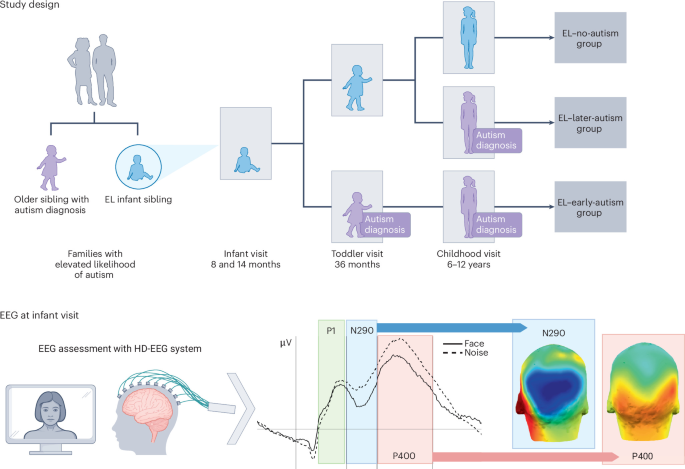
A recent perspective published in Nature Health Sciences introduces the concept of “chronogeneity” as a potential tool to better understand and categorize autism spectrum disorder. The approach focuses on how developmental trajectories unfold over time, addressing the long-standing challenge of phenotypic and etiological variation within the autistic population.
Understanding Chronogeneity in Development
The authors outline four key areas of emerging evidence supporting this framework. First, data from prospective family-history studies suggest that certain autistic traits may not be detected until after early childhood. Second, varying ages at diagnosis appear to correlate with distinct brain predictors, hinting at underlying neurodevelopmental differences. Third, genetic analyses point to qualitative variations in polygenic and rare variant profiles. Finally, co-occurring mental health conditions shift depending on the age of diagnosis, reflecting differing clinical needs.
What to know: While the chronogeneity framework offers a promising new lens for researchers and clinicians to stratify autism subtypes, the perspective is an early-stage conceptual model rather than a clinical diagnostic tool. The authors emphasize that further empirical testing is necessary to validate developmental trajectories as reliable biomarkers. Readers seeking personalized medical guidance or evaluations should consult a qualified healthcare professional.
Source Nature Health Sciences — nature.com/articles/s44220-026-00755-w ↗
Read next
 🏥Public Health
Preventive Services Task Force Resumes Meetings Under New Leadership
The U.S. Preventive Services Task Force is set to reconvene this week for the first time in over a year following a significant membership overhaul by Health Secretary Ro…
 ❤️Conditions & Care
Blood-Based Genetic Signature May Predict CAR T-Cell Therapy Success in Lymphoma
Researchers have identified a specific RNA signature in blood plasma that may help predict how well lymphoma patients respond to CAR T-cell therapy.
 🧠AI Analysis
Ultraprocessed Diets May Impact Brain Reward Systems in Younger Adults
A Virginia Tech study suggests that individuals aged 18 to 21 may experience changes in brain reward processing after consuming ultraprocessed foods, a response not obser…
 🧠Mind & Mental Health
Addressing Body Image and the Reality of Gluteal Anatomy
A personal reflection on the social and psychological impact of body shape, specifically regarding the gluteal region, and the limitations of consumer solutions for perce…
 ❤️Conditions & Care
Migraine and Smoking Linked to Increased Early Stroke Risk in Women
A large-scale study suggests that people who have given birth and experience migraines while also smoking face a significantly higher risk of stroke before age 60.
 🏃Fitness
Expert Advice on Hydration Gear Sparks Debate Among Recreational Runners
Olympic medalist Josh Kerr recently suggested that runners may not require hydration packs for distances under 12 miles, igniting a broader conversation about gear necess…