New Review Highlights Sleep Deprivation and Melatonin in Obesity and Metabolic Health
A recent narrative review published in Nature Health Sciences examines how sleep loss, circadian disruption, and melatonin signaling interact to influence appetite and metabolic function.
 🔬Research
Photo: Nature Health Sciences
Key points
- Sleep deprivation is linked to increased hunger and a preference for energy-dense foods.
- Circadian disruption and altered melatonin signaling contribute to metabolic dysfunction.
- MT1, MT2, and MTNR1B receptors connect circadian biology to individual metabolic risk.
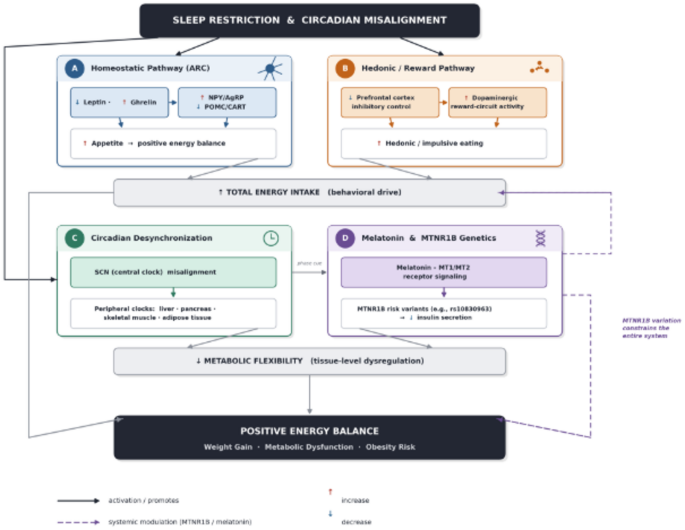
A comprehensive narrative review published in Nature Health Sciences has explored the complex physiological links connecting insufficient sleep, circadian disruption, and melatonin signaling to weight regulation and metabolic dysfunction. The authors of the review examined literature from January 2011 to June 2026, alongside key mechanistic studies, to better understand how sleep habits influence eating behaviors and energy metabolism.
According to the findings, sleep deprivation is linked to heightened hunger levels and an increased preference for energy-dense foods. The review notes that while changes in circulating leptin and ghrelin remain inconsistent across existing research, sleep loss significantly impacts hypothalamic signaling and reward-driven eating behaviors by altering prefrontal cortex activity and dopaminergic pathways. Furthermore, the analysis points out that circadian misalignment contributes to metabolic dysfunction and may elevate obesity risk, with melatonin receptors such as MT1, MT2, and the MTNR1B genetic axis playing a central integrative role between circadian timing and metabolic regulation.
What to know: The authors suggest that adequate sleep and circadian alignment should be viewed as modifiable factors in managing metabolic health and preventing obesity, though effects remain context-dependent. Readers should consult a qualified healthcare provider for personalized medical advice regarding sleep or metabolic concerns.
Source Nature Health Sciences — nature.com/articles/s44573-026-00034-w ↗
Read next
 🏃Fitness
Understanding and Addressing Love Handles Through Lifestyle Changes
Experts clarify that spot reduction of fat is not physiologically possible, recommending a combination of calorie management and high-intensity interval training instead.
 🏃Fitness
Ciele Releases New Woolmark-Certified Merino Winter Running Apparel
Montreal-based brand Ciele has launched its second collection of merino wool running gear, featuring performance-focused fabrics designed for cold-weather training.
 🏥Public Health
Preventive Services Task Force Resumes Meetings Under New Leadership
The U.S. Preventive Services Task Force is set to reconvene this week for the first time in over a year following a significant membership overhaul by Health Secretary Ro…
 ❤️Conditions & Care
Blood-Based Genetic Signature May Predict CAR T-Cell Therapy Success in Lymphoma
Researchers have identified a specific RNA signature in blood plasma that may help predict how well lymphoma patients respond to CAR T-cell therapy.
 🧠AI Analysis
Ultraprocessed Diets May Impact Brain Reward Systems in Younger Adults
A Virginia Tech study suggests that individuals aged 18 to 21 may experience changes in brain reward processing after consuming ultraprocessed foods, a response not obser…
 🧠Mind & Mental Health
Addressing Body Image and the Reality of Gluteal Anatomy
A personal reflection on the social and psychological impact of body shape, specifically regarding the gluteal region, and the limitations of consumer solutions for perce…