Virtual Reality Training May Rapidly Improve Postural Control and Balance in Older Adults, Study Suggests
Researchers at Lund University found that repeated exposure to immersive virtual reality simulations can help older adults adapt to challenging visual environments and improve stability.
 🔬Research
Photo: Nature Health Sciences
Key points
- Lund University researchers studied 32 older adults using immersive VR simulations.
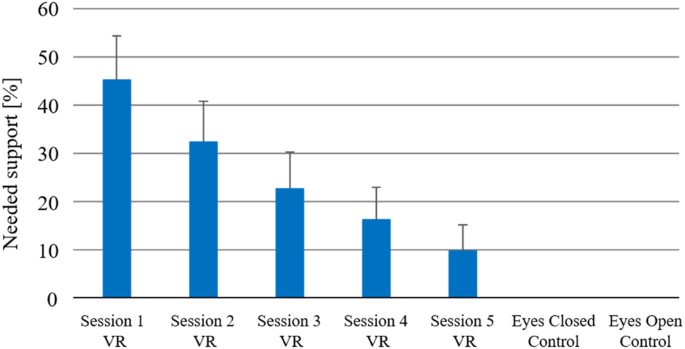
- Repeated VR exposures reduced the need for fall-preventing support from 45% to 10%.
- Results suggest rapid sensorimotor adaptations and reduced visual dependency in balance control.
A recent study published in Nature Health Sciences by researchers at Lund University investigated how older adults respond to challenging visual environments using immersive virtual reality (VR). The trial evaluated 32 older participants, with a mean age of 74.8 years, who were exposed to a repeating 120-second VR roller-coaster simulation. Scientists recorded postural stability and muscle activity across four postural leg muscles to understand how visual stimulation impacts balance control.
During the initial VR exposure, researchers noted that 45 percent of the participants required physical support to prevent falls, alongside significant increases in energy expenditure for stability and muscular co-contractions. However, after repeated sessions, the frequency of incidences requiring support dropped sharply to 10 percent. These improvements were accompanied by measurable decreases in stability energy use and muscle stiffness, suggesting that older adults can rapidly adapt their sensorimotor control when repeatedly exposed to distorted visual inputs.
What to know about the VR balance study
While the findings suggest that short-term VR interventions may help reduce visual dependency and enhance stability, the research comes with important limitations. The study involved a small sample size of older adults, and the observational nature of the trial means further research is necessary to evaluate long-term benefits outside of laboratory settings. Readers should always consult a qualified healthcare professional before making any personal medical or fitness decisions.
Older adults initially relied on a muscle-stiffening strategy during challenging visual tasks, but repeated VR sessions rapidly enhanced sensorimotor control and reduced fall-preventing support needs.
- Study examined 32 older participants with a mean age of 74.8 years.
- Participants underwent five repetitions of a 120-second immersive VR roller-coaster simulation.
- Incidences requiring fall-preventing support fell from 45% initially down to 10% after repeated exposures.
Source Nature Health Sciences — nature.com/articles/s41598-026-80453-w ↗
Read next
 🏃Fitness
Understanding and Addressing Love Handles Through Lifestyle Changes
Experts clarify that spot reduction of fat is not physiologically possible, recommending a combination of calorie management and high-intensity interval training instead.
 🏃Fitness
Ciele Releases New Woolmark-Certified Merino Winter Running Apparel
Montreal-based brand Ciele has launched its second collection of merino wool running gear, featuring performance-focused fabrics designed for cold-weather training.
 🏥Public Health
Preventive Services Task Force Resumes Meetings Under New Leadership
The U.S. Preventive Services Task Force is set to reconvene this week for the first time in over a year following a significant membership overhaul by Health Secretary Ro…
 ❤️Conditions & Care
Blood-Based Genetic Signature May Predict CAR T-Cell Therapy Success in Lymphoma
Researchers have identified a specific RNA signature in blood plasma that may help predict how well lymphoma patients respond to CAR T-cell therapy.
 🧠AI Analysis
Ultraprocessed Diets May Impact Brain Reward Systems in Younger Adults
A Virginia Tech study suggests that individuals aged 18 to 21 may experience changes in brain reward processing after consuming ultraprocessed foods, a response not obser…
 🧠Mind & Mental Health
Addressing Body Image and the Reality of Gluteal Anatomy
A personal reflection on the social and psychological impact of body shape, specifically regarding the gluteal region, and the limitations of consumer solutions for perce…