New Review Highlights Rising Global Rates of Early-Onset Breast Cancer and Need for Risk-Tailored Detection
A comprehensive review published in Nature Health Sciences examines the growing global burden of early-onset breast cancer diagnosed before age 50, urging a shift toward multifactorial risk assessment and equitable care systems.
 🔬Research
Photo: Nature Health Sciences
Key points
- Early-onset breast cancer refers to diagnoses occurring before the age of 50.
- Standard age-based screening may miss high-risk younger individuals, necessitating multifactorial risk models.
- Systemic barriers such as diagnostic capacity and treatment affordability continue to affect patient outcomes globally.
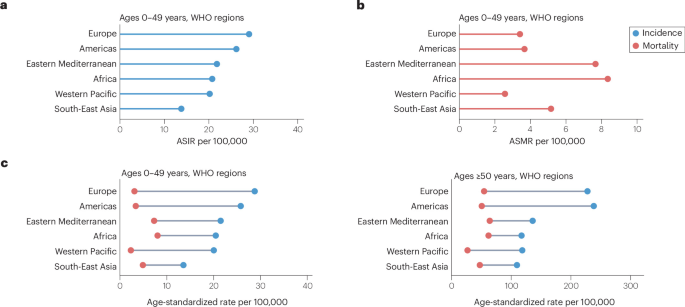
A comprehensive review paper published in Nature Health Sciences outlines the rising global incidence of early-onset breast cancer, defined as cases diagnosed in individuals under 50 years old. Authored by an international team of researchers, the analysis highlights that these diagnoses represent an increasing share of overall cases worldwide and frequently involve more challenging clinical outcomes. While genetic predispositions and inherited gene variants play a notable role, the authors emphasize that genetics alone cannot account for the upward trends and ongoing demographic disparities observed across various populations.
The report underscores that standard age-based screening guidelines often fail to identify younger individuals at elevated risk. To improve detection, the review suggests incorporating comprehensive family history, genetic testing where appropriate, evaluations of breast density, and validated multifactorial risk models that account for ancestry and lifestyle factors. However, the authors caution that early diagnosis must be closely coupled with rapid follow-up diagnostic imaging, tissue biopsies, and biomarker-driven therapies to meaningfully alter patient outcomes.
Furthermore, the publication addresses systemic roadblocks that hinder optimal care, including limited diagnostic infrastructure, disparities in treatment affordability, and financial toxicity for patients. The proposed framework advocates for resource-adapted strategies that align biological risk evaluation with equitable healthcare delivery. What to know: Early-onset breast cancer involves complex risk factors beyond standard age guidelines, and patients should consult qualified healthcare professionals regarding personal screening options and family risk history.
Source Nature Health Sciences — nature.com/articles/s41571-026-01222-2 ↗
Read next
 🧠Mind & Mental Health
Addressing Body Image and the Reality of Gluteal Anatomy
A personal reflection on the social and psychological impact of body shape, specifically regarding the gluteal region, and the limitations of consumer solutions for perce…
 ❤️Conditions & Care
Migraine and Smoking Linked to Increased Early Stroke Risk in Women
A large-scale study suggests that people who have given birth and experience migraines while also smoking face a significantly higher risk of stroke before age 60.
 🏃Fitness
Expert Advice on Hydration Gear Sparks Debate Among Recreational Runners
Olympic medalist Josh Kerr recently suggested that runners may not require hydration packs for distances under 12 miles, igniting a broader conversation about gear necess…
 🏃Fitness
A Structured Approach to Beginning a Strength and Cardio Routine
A new four-week training program offers beginners a guided path to incorporating strength training and cardiovascular exercise into their daily lives.
 🧠Mind & Mental Health
The Role of Daily Mobility Training in Managing Sedentary Tension
A two-week personal trial suggests that incorporating short, daily mobility exercises may help alleviate stiffness associated with sedentary desk work. Experts note that …
 🧠Mind & Mental Health
New Theoretical Framework Explores Memory Formation and Dementia
Researchers have proposed a new model suggesting the brain's limbic system functions similarly to generative AI, potentially offering a new way to understand and classify…