Federal Funding Cuts Threaten Overdose Prevention and Drug Testing Supplies
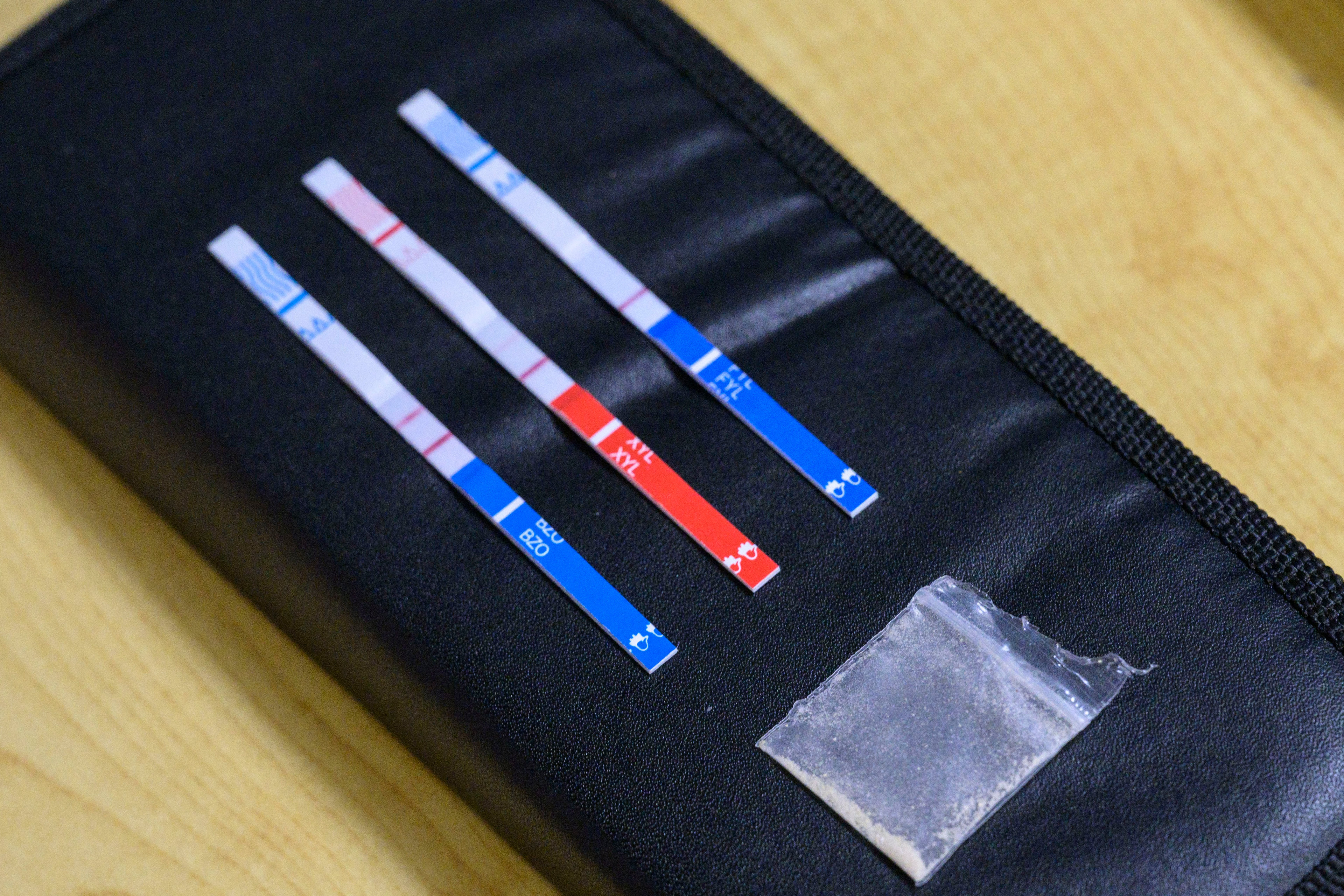
Recent federal funding restrictions are blocking community groups from purchasing critical drug testing supplies, forcing local directors to rely on personal finances to keep harm reduction programs running.
 🏥Public Health
Photo: KFF Health News
Key points
- Federal agencies banned the use of grant money for purchasing drug contaminant test strips.
- The policy shift is part of a broader national funding reduction exceeding $300 million for overdose prevention.
- Local volunteers are personally funding testing supplies to maintain basic harm reduction operations.
A recent shift in federal policy has left community-based public health organizations scrambling for resources to prevent drug overdoses. The Substance Abuse and Mental Health Services Administration issued a directive prohibiting groups from utilizing federal grant money to purchase testing strips designed to detect dangerous contaminants like fentanyl, xylazine, and medetomidine in the illicit drug supply. These policy changes form part of a broader reduction exceeding $300 million in federal funding dedicated to national overdose prevention and treatment programs.
In Greenville, North Carolina, volunteer-led initiatives like ekiM for Change have been directly impacted by the loss of these financial resources. Director Diannee Carden Glenn noted that her organization previously depended on annual federal allocations to supply communities with crucial testing equipment. Without this monetary support, and with state-level distribution networks also constrained, local directors are increasingly relying on personal savings and private donations to sustain their safety operations.
Harm reduction advocates emphasize that checking street substances for dangerous additives remains an effective strategy to mitigate fatal overdoses, particularly as synthetic additives become more widespread. Furthermore, research indicates that individuals who utilize contaminant testing tools are more likely to adopt additional safety measures, such as carrying naloxone or avoiding using drugs alone. Critics of these programs, however, contend that supplying testing materials may inadvertently encourage substance use rather than prioritize absolute abstinence.
What to know: Federal grants can no longer be applied toward purchasing drug contaminant test strips, heavily impacting local public health groups. Always consult a qualified healthcare provider or local public health official for guidance on community health resources and overdose prevention strategies.
Source KFF Health News — kffhealthnews.org/public-health/fentanyl-test-strips-federal-cuts-samhs… ↗
Read next
 🏃Fitness
Understanding and Addressing Love Handles Through Lifestyle Changes
Experts clarify that spot reduction of fat is not physiologically possible, recommending a combination of calorie management and high-intensity interval training instead.
 🏃Fitness
Ciele Releases New Woolmark-Certified Merino Winter Running Apparel
Montreal-based brand Ciele has launched its second collection of merino wool running gear, featuring performance-focused fabrics designed for cold-weather training.
 ❤️Conditions & Care
Blood-Based Genetic Signature May Predict CAR T-Cell Therapy Success in Lymphoma
Researchers have identified a specific RNA signature in blood plasma that may help predict how well lymphoma patients respond to CAR T-cell therapy.
 🧠AI Analysis
Ultraprocessed Diets May Impact Brain Reward Systems in Younger Adults
A Virginia Tech study suggests that individuals aged 18 to 21 may experience changes in brain reward processing after consuming ultraprocessed foods, a response not obser…
 🧠Mind & Mental Health
Addressing Body Image and the Reality of Gluteal Anatomy
A personal reflection on the social and psychological impact of body shape, specifically regarding the gluteal region, and the limitations of consumer solutions for perce…
 ❤️Conditions & Care
Migraine and Smoking Linked to Increased Early Stroke Risk in Women
A large-scale study suggests that people who have given birth and experience migraines while also smoking face a significantly higher risk of stroke before age 60.