AI-Powered Retinal Imaging Shows Potential for Predicting Preeclampsia
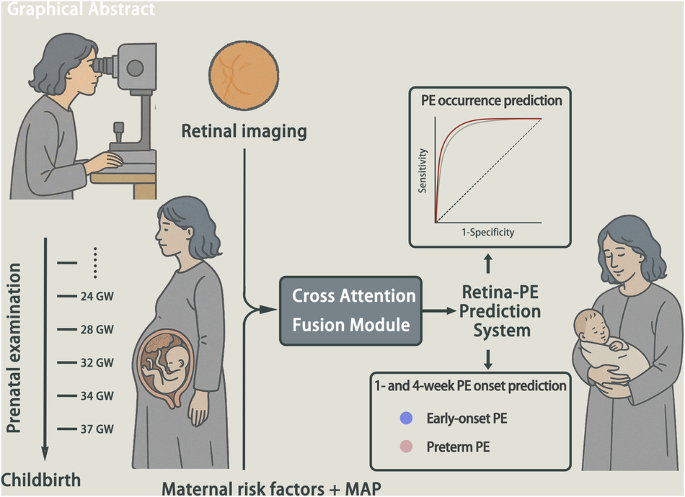
Researchers have developed a deep learning model that utilizes retinal scans and clinical data to identify risks for preeclampsia during pregnancy.
 🥗Nutrition
Photo: Nature Health Sciences
Key points
- Retina-PE uses retinal images and blood pressure data to predict preeclampsia risk.
- The model was developed using data from 8,616 pregnant individuals.
- The tool showed varying accuracy in predicting both preterm and early-onset preeclampsia.
A new study published in npj Digital Medicine suggests that a deep learning model, dubbed Retina-PE, may assist in identifying pregnant individuals at risk for preeclampsia. By combining retinal photographs with clinical maternal data and blood pressure readings, the tool aims to provide a noninvasive method for risk stratification. Researchers analyzed data from 8,616 pregnant individuals across multiple centers to evaluate the model's predictive capabilities regarding the timing and onset of the condition.
The findings indicate that the model demonstrated varying levels of accuracy in predicting preeclampsia across different timeframes, including early-onset cases. While the results are promising, the study remains a retrospective evaluation of prospectively collected data. Further clinical trials are necessary to determine how such imaging technologies might be effectively integrated into routine prenatal care.
What to know: Preeclampsia is a serious pregnancy complication, and while this AI tool shows potential, it is not currently a standard diagnostic procedure. Patients should always consult with their obstetrician or healthcare provider regarding prenatal screening and any concerns about their health during pregnancy.
Source Nature Health Sciences — nature.com/articles/s41746-026-03463-y ↗
Read next
 🏥Public Health
Preventive Services Task Force Resumes Meetings Under New Leadership
The U.S. Preventive Services Task Force is set to reconvene this week for the first time in over a year following a significant membership overhaul by Health Secretary Ro…
 ❤️Conditions & Care
Blood-Based Genetic Signature May Predict CAR T-Cell Therapy Success in Lymphoma
Researchers have identified a specific RNA signature in blood plasma that may help predict how well lymphoma patients respond to CAR T-cell therapy.
 🧠AI Analysis
Ultraprocessed Diets May Impact Brain Reward Systems in Younger Adults
A Virginia Tech study suggests that individuals aged 18 to 21 may experience changes in brain reward processing after consuming ultraprocessed foods, a response not obser…
 🧠Mind & Mental Health
Addressing Body Image and the Reality of Gluteal Anatomy
A personal reflection on the social and psychological impact of body shape, specifically regarding the gluteal region, and the limitations of consumer solutions for perce…
 ❤️Conditions & Care
Migraine and Smoking Linked to Increased Early Stroke Risk in Women
A large-scale study suggests that people who have given birth and experience migraines while also smoking face a significantly higher risk of stroke before age 60.
 🔬Research
CBD Oil Found Ineffective for Managing Behavioral Issues in Youths with Intellectual Disabilities
A double-blind clinical trial published in JAMA Pediatrics indicates that CBD oil provides no significant behavioral improvement for children and teenagers with intellect…