Experts Outline New Strategies to Overcome Barriers in Sarcopenia Drug Development
An expert working group has released updated recommendations to address the ongoing lack of approved pharmacological treatments for sarcopenia.
 🥗Nutrition
Photo: Nature Health Sciences
Key points
- Sarcopenia involves a significant loss of muscle mass, strength, and overall physical function.
- Despite rising clinical awareness, there are currently no approved pharmacological therapies specifically for the condition.
- A new expert working group has published updated recommendations to harmonize clinical trial designs and regulatory standards.
Addressing the Gap in Sarcopenia Treatment
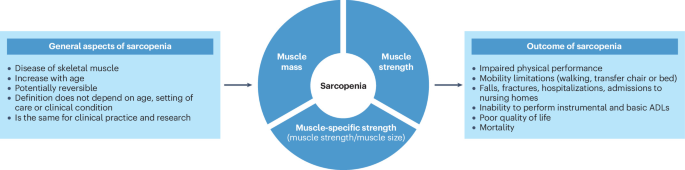
Sarcopenia, defined by a progressive decline in muscle mass, strength, and function, is frequently linked to adverse health events such as falls, fractures, and a higher risk of premature mortality. Despite a growing awareness of its widespread clinical and societal impact, researchers have yet to successfully translate scientific advancements into officially approved drug therapies. A working group convened by the World Health Organization Collaborating Centre for Epidemiology of Musculoskeletal Conditions and Ageing recently evaluated why progress remains slow.
According to the expert perspective published in Nature Health Sciences, the primary obstacles include inconsistencies in clinical trial designs, varying patient eligibility criteria, differing follow-up timelines, and a lack of regulatory harmonization across regions. Because medical definitions and trial methodologies have evolved since the previous guidelines established in 2020 by the European Society for Clinical and Economic Aspects of Osteoporosis and Osteoarthritis (ESCEO), experts set out to redefine standard approaches for upcoming therapeutic evaluations.
What to Know About Trial Design and Future Care
The newly outlined framework details modern strategies for conducting pharmacological trials targeting age-related muscle loss. This guidance covers how to properly select target populations, incorporate digital health metrics, utilize patient-reported outcomes, and implement reliable biomarkers. As clinical researchers work to standardize these assessments, patients are always advised to consult a qualified healthcare provider for personal medical guidance, diagnosis, or treatment decisions regarding physical decline and nutrition.
Source Nature Health Sciences — nature.com/articles/s41584-026-01457-4 ↗
Read next
 🏥Public Health
Preventive Services Task Force Resumes Meetings Under New Leadership
The U.S. Preventive Services Task Force is set to reconvene this week for the first time in over a year following a significant membership overhaul by Health Secretary Ro…
 ❤️Conditions & Care
Blood-Based Genetic Signature May Predict CAR T-Cell Therapy Success in Lymphoma
Researchers have identified a specific RNA signature in blood plasma that may help predict how well lymphoma patients respond to CAR T-cell therapy.
 🧠AI Analysis
Ultraprocessed Diets May Impact Brain Reward Systems in Younger Adults
A Virginia Tech study suggests that individuals aged 18 to 21 may experience changes in brain reward processing after consuming ultraprocessed foods, a response not obser…
 🧠Mind & Mental Health
Addressing Body Image and the Reality of Gluteal Anatomy
A personal reflection on the social and psychological impact of body shape, specifically regarding the gluteal region, and the limitations of consumer solutions for perce…
 ❤️Conditions & Care
Migraine and Smoking Linked to Increased Early Stroke Risk in Women
A large-scale study suggests that people who have given birth and experience migraines while also smoking face a significantly higher risk of stroke before age 60.
 🔬Research
CBD Oil Found Ineffective for Managing Behavioral Issues in Youths with Intellectual Disabilities
A double-blind clinical trial published in JAMA Pediatrics indicates that CBD oil provides no significant behavioral improvement for children and teenagers with intellect…