Study explores how actively suppressing food memories affects appetite and desire differently based on weight
A new study from Nature Health Sciences reveals that trying to suppress thoughts about specific foods can alter desire differently in normal-weight individuals compared to those with overweight or obesity.
 🥗Nutrition
Photo: Nature Health Sciences
Key points
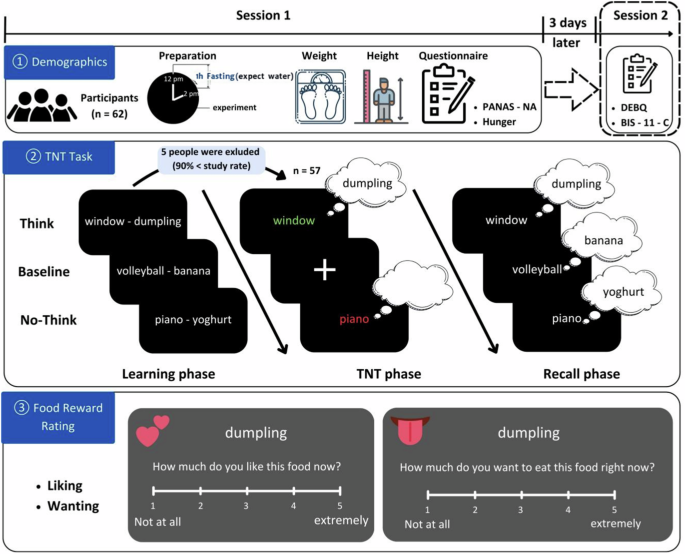
- Study tested memory suppression using the Think/No-Think task on 57 female participants.
- Normal-weight individuals showed reduced wanting for suppressed foods, while those with overweight/obesity experienced a rebound effect.
- Restrained eating behaviors were found to mediate these divergent psychological responses.
Researchers investigating appetite regulation have explored how actively suppressing food-related memory retrieval alters subjective evaluations of food reward. Published in Nature Health Sciences, the study involved fifty-seven female university students who participated in a food-specific Think/No-Think task. Participants were trained to actively retrieve certain food-related words while purposefully suppressing others, allowing scientists to measure changes in self-reported liking and wanting.
The findings indicate that participants across all body mass index levels successfully recalled fewer suppressed items compared to retrieved and baseline items. However, subjective evaluations of these items diverged notably. Normal-weight participants exhibited a significant drop in wanting for suppressed food items, suggesting successful cognitive devaluation. In contrast, participants living with overweight or obesity demonstrated a heightened desire for those same suppressed items. Further statistical evaluation showed that restrained eating behaviors mediated these contrasting outcomes.
While the study offers intriguing insights into cognitive control over appetite, the authors note important limitations, including a small sample size consisting entirely of female university students and an observational design. Furthermore, active memory suppression is an experimental approach and does not equate to proven dietary interventions. Readers should consult a healthcare provider for any personal medical or nutritional decisions.
What to know: Actively suppressing thoughts about food may decrease desire in normal-weight individuals, but it can trigger a rebound effect of increased wanting in those with overweight or obesity, according to a recent study.
Source Nature Health Sciences — nature.com/articles/s41366-026-02251-8 ↗
Read next
 🧠Mind & Mental Health
Addressing Body Image and the Reality of Gluteal Anatomy
A personal reflection on the social and psychological impact of body shape, specifically regarding the gluteal region, and the limitations of consumer solutions for perce…
 ❤️Conditions & Care
Migraine and Smoking Linked to Increased Early Stroke Risk in Women
A large-scale study suggests that people who have given birth and experience migraines while also smoking face a significantly higher risk of stroke before age 60.
 🔬Research
CBD Oil Found Ineffective for Managing Behavioral Issues in Youths with Intellectual Disabilities
A double-blind clinical trial published in JAMA Pediatrics indicates that CBD oil provides no significant behavioral improvement for children and teenagers with intellect…
 🏃Fitness
Expert Advice on Hydration Gear Sparks Debate Among Recreational Runners
Olympic medalist Josh Kerr recently suggested that runners may not require hydration packs for distances under 12 miles, igniting a broader conversation about gear necess…
 🏃Fitness
A Structured Approach to Beginning a Strength and Cardio Routine
A new four-week training program offers beginners a guided path to incorporating strength training and cardiovascular exercise into their daily lives.
 🧠Mind & Mental Health
The Role of Daily Mobility Training in Managing Sedentary Tension
A two-week personal trial suggests that incorporating short, daily mobility exercises may help alleviate stiffness associated with sedentary desk work. Experts note that …