Tibetan Dark Tea May Help Protect Against Ulcerative Colitis, Study Suggests
A new study published in npj Science of Food indicates that Tibetan dark tea could help alleviate ulcerative colitis by targeting inflammation, cell death, and gut bacteria in animal and cell models.
 🥗Nutrition
Photo: Nature Health Sciences
Key points
- Study investigated Tibetan dark tea using cell cultures and a mouse model of colitis.
- Results indicate potential reductions in inflammation, tissue injury, and ferroptosis.
- Researchers observed positive shifts in gut microbiota composition, including an increase in Akkermansia.
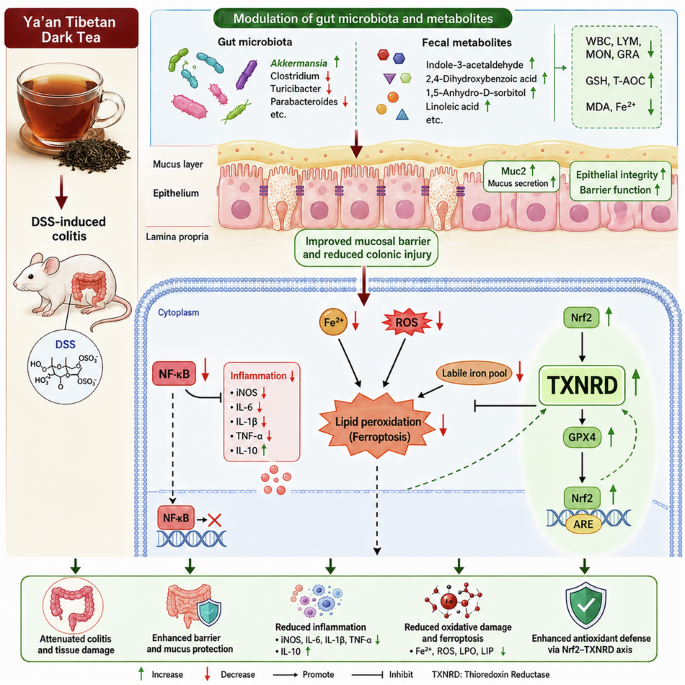
Researchers at Sichuan Agricultural University have investigated the therapeutic potential of Tibetan dark tea for managing ulcerative colitis (UC), an inflammatory bowel condition. Published in the journal npj Science of Food, the study examined how the beverage impacts disease markers using laboratory cell models and mice with chemically induced colitis. The findings suggest that the tea may help reduce physical symptoms such as body weight loss, tissue damage, systemic inflammation, and colon shortening.
The investigation revealed that components of the tea act on multiple biological pathways simultaneously. Specifically, the treatment appeared to suppress inflammatory signaling through NF-kB, boost antioxidant defenses mediated by Nrf2, and regulate iron balance to protect colonic cells from a specific type of iron-driven cell death known as ferroptosis. Additionally, the analysis showed that the beverage helped reshape the gut microbiome by increasing beneficial bacteria like Akkermansia while easing metabolic disturbances related to tryptophan, flavonoids, and other compounds.
As this study was conducted using animal models and cellular tests, experts note that further clinical trials are necessary to confirm whether these benefits translate to humans. Readers should keep in mind that laboratory studies in mice do not guarantee identical results in people. What to know: While the research highlights a promising link between Tibetan dark tea components and intestinal health, anyone considering dietary changes for chronic gastrointestinal conditions should consult a qualified healthcare provider first.
Source Nature Health Sciences — nature.com/articles/s41538-026-01180-0 ↗
Read next
 🏃Fitness
Understanding and Addressing Love Handles Through Lifestyle Changes
Experts clarify that spot reduction of fat is not physiologically possible, recommending a combination of calorie management and high-intensity interval training instead.
 🏃Fitness
Ciele Releases New Woolmark-Certified Merino Winter Running Apparel
Montreal-based brand Ciele has launched its second collection of merino wool running gear, featuring performance-focused fabrics designed for cold-weather training.
 🏥Public Health
Preventive Services Task Force Resumes Meetings Under New Leadership
The U.S. Preventive Services Task Force is set to reconvene this week for the first time in over a year following a significant membership overhaul by Health Secretary Ro…
 ❤️Conditions & Care
Blood-Based Genetic Signature May Predict CAR T-Cell Therapy Success in Lymphoma
Researchers have identified a specific RNA signature in blood plasma that may help predict how well lymphoma patients respond to CAR T-cell therapy.
 🧠AI Analysis
Ultraprocessed Diets May Impact Brain Reward Systems in Younger Adults
A Virginia Tech study suggests that individuals aged 18 to 21 may experience changes in brain reward processing after consuming ultraprocessed foods, a response not obser…
 🧠Mind & Mental Health
Addressing Body Image and the Reality of Gluteal Anatomy
A personal reflection on the social and psychological impact of body shape, specifically regarding the gluteal region, and the limitations of consumer solutions for perce…