Study Uses Wearables to Reveal Cardiac Activity Patterns During Daily Driving
Researchers analyzing continuous wearable data from 57 participants found that heart rates remained above baseline during nearly all routine driving periods.
 🏃Fitness
Photo: Nature Health Sciences
Key points
- Wearable sensors tracked 57 participants over a week of everyday driving.
- Heart rates remained elevated above baseline with fewer recovery intervals during transit.
- The observational design calls for broader studies to confirm cumulative health impacts.
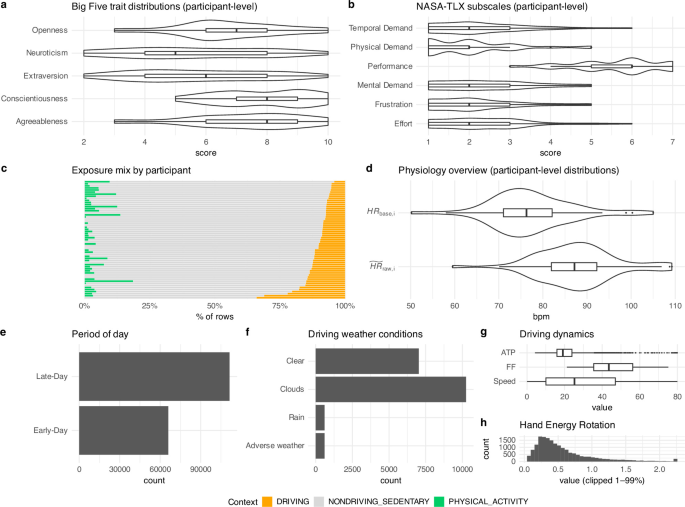
A recent study published in Nature Health Sciences examined how everyday driving affects cardiac activity by utilizing continuous, synchronized wearable and vehicular measurements. Investigators from the NUBI II dataset analyzed 393 participant-days, accumulating 177,318 minute-level observations to map heart rate fluctuations during routine commutes compared to non-driving sedentary periods.
The findings suggest that heart rates stayed elevated above individual physiological baselines throughout nearly all recorded driving time, while varying within a more restricted range than during standard sedentary tasks. Furthermore, returns to baseline levels occurred less frequently while driving, pointing to a sustained cardiac operating regime linked to the task. The authors note that the study relies on observational data from a modest sample size of 57 individuals, meaning further research is necessary to generalize these patterns across broader populations.
- What to know: Routine driving keeps heart rates elevated above personal baselines with fewer periods of recovery, according to continuous wearable monitoring.
- Wearable devices allow researchers to study ordinary daily behaviors outside of controlled laboratory settings.
- Always consult a qualified healthcare provider for personalized medical advice or cardiovascular concerns.
“Repeated everyday behaviors may produce sustained physiological activation, but quantifying such exposure requires continuous physiological and contextual measurements.” — Study Authors
Source Nature Health Sciences — nature.com/articles/s44482-026-00055-1 ↗
Read next
 🧠Mind & Mental Health
Addressing Body Image and the Reality of Gluteal Anatomy
A personal reflection on the social and psychological impact of body shape, specifically regarding the gluteal region, and the limitations of consumer solutions for perce…
 ❤️Conditions & Care
Migraine and Smoking Linked to Increased Early Stroke Risk in Women
A large-scale study suggests that people who have given birth and experience migraines while also smoking face a significantly higher risk of stroke before age 60.
 🔬Research
CBD Oil Found Ineffective for Managing Behavioral Issues in Youths with Intellectual Disabilities
A double-blind clinical trial published in JAMA Pediatrics indicates that CBD oil provides no significant behavioral improvement for children and teenagers with intellect…
 🧠Mind & Mental Health
The Role of Daily Mobility Training in Managing Sedentary Tension
A two-week personal trial suggests that incorporating short, daily mobility exercises may help alleviate stiffness associated with sedentary desk work. Experts note that …
 🧠Mind & Mental Health
New Theoretical Framework Explores Memory Formation and Dementia
Researchers have proposed a new model suggesting the brain's limbic system functions similarly to generative AI, potentially offering a new way to understand and classify…
 🏥Public Health
Recall Issued for Generic Propranolol Over Potential Metal Contamination
Breckenridge Pharmaceutical has initiated a voluntary recall of one lot of generic propranolol capsules due to the potential presence of metal fragments.