New Study Identifies Potential Early Biomarker and Mechanism for Kawasaki Disease in Children
Researchers have discovered a molecular pathway driving Kawasaki disease and identified serum CXCL8 as a promising early diagnostic biomarker.
 ❤️Conditions & Care
Photo: Nature Health Sciences
Key points
- Kawasaki disease is the leading cause of acquired heart disease in young children.
- Researchers identified the miR-10b-5p molecule as a driver of endothelial inflammation.
- Elevated serum CXCL8 showed potential as an early diagnostic biomarker during initial clinical presentation.
A recent study published in Nature Health Sciences has uncovered key molecular mechanisms behind Kawasaki disease, an acute systemic inflammation of the blood vessels that serves as the leading cause of acquired heart disease in children. The condition predominantly impacts young children, particularly in northeast Asia, and carries a risk of severe coronary artery complications if left untreated. Because early clinical recognition remains challenging during emergency department visits, investigators sought to pinpoint reliable biomarkers for prompt detection.
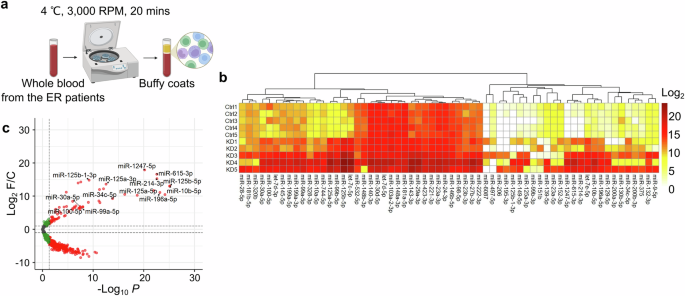
Through whole microRNA sequencing of blood samples from patients and febrile controls, researchers isolated upregulated microRNA candidates and validated them using mouse models. The findings suggest that a specific molecule, miR-10b-5p, is consistently elevated and drives a shift in endothelial cells toward a proinflammatory state. Additional analyses revealed that this pathway ultimately upregulates serum C-X-C motif chemokine ligand 8 (CXCL8). Serum levels of CXCL8 were markedly elevated at initial presentation compared to febrile controls, showing potential diagnostic utility with high sensitivity and specificity.
What to know: While these findings offer valuable insights into the pathophysiology of Kawasaki disease, the study is an early-stage investigation that requires broader clinical validation. Because this research involves laboratory models and observational data, patients and families should consult pediatric specialists or primary care doctors for any personal medical decisions regarding diagnosis and treatment.
Source Nature Health Sciences — nature.com/articles/s12276-026-01887-w ↗
Read next
 🏥Public Health
Preventive Services Task Force Resumes Meetings Under New Leadership
The U.S. Preventive Services Task Force is set to reconvene this week for the first time in over a year following a significant membership overhaul by Health Secretary Ro…
 🧠AI Analysis
Ultraprocessed Diets May Impact Brain Reward Systems in Younger Adults
A Virginia Tech study suggests that individuals aged 18 to 21 may experience changes in brain reward processing after consuming ultraprocessed foods, a response not obser…
 🧠Mind & Mental Health
Addressing Body Image and the Reality of Gluteal Anatomy
A personal reflection on the social and psychological impact of body shape, specifically regarding the gluteal region, and the limitations of consumer solutions for perce…
 🔬Research
CBD Oil Found Ineffective for Managing Behavioral Issues in Youths with Intellectual Disabilities
A double-blind clinical trial published in JAMA Pediatrics indicates that CBD oil provides no significant behavioral improvement for children and teenagers with intellect…
 🏃Fitness
Expert Advice on Hydration Gear Sparks Debate Among Recreational Runners
Olympic medalist Josh Kerr recently suggested that runners may not require hydration packs for distances under 12 miles, igniting a broader conversation about gear necess…
 🏃Fitness
A Structured Approach to Beginning a Strength and Cardio Routine
A new four-week training program offers beginners a guided path to incorporating strength training and cardiovascular exercise into their daily lives.