New Study Identifies Moderate-Risk BRCA2 Variants Linked to Hereditary Cancer
Recent research published in Nature Health Sciences reveals that certain partially functional missense variants in the BRCA2 gene are linked to moderate breast cancer risks and later ages of diagnosis.
 ❤️Conditions & Care
Photo: Nature Health Sciences
Key points
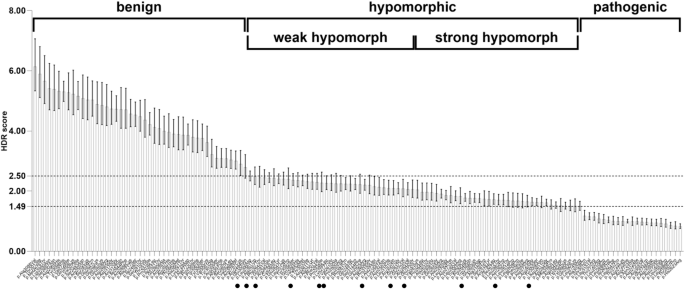
- Study identifies 70 candidate hypomorphic missense variants in the BRCA2 DNA-binding domain.
- Thirty-four strong hypomorphs are linked to moderate breast cancer risks and later diagnosis ages.
- Results show implications for refining hereditary cancer risk estimation and targeted therapies.
A new study published in Nature Health Sciences has identified and characterized 70 candidate hypomorphic missense variants in the DNA-binding domain of the BRCA2 gene. Researchers examined how these partially functional genetic alterations affect homologous recombination DNA repair activity, cell survival, and sensitivity to targeted therapies. The findings suggest that these specific changes act as reduced penetrance pathogenic variants, conferring moderate risks of female breast cancer at later diagnosis ages compared to classical high-risk mutations.
While classical pathogenic variants in BRCA2 are well known to sharply elevate the lifetime risks of breast, ovarian, prostate, and pancreatic cancers, these newly studied hypomorphic variants show partial function. The investigation demonstrated that 34 of these strong hypomorphs are associated with moderate cancer risks, and 14 can now be classified as likely pathogenic using an integrated ClinGen curation model. Furthermore, tumors carrying these variants exhibited homologous recombination deficiency at lower rates than those seen with classical mutations, though they still showed increased sensitivity to Poly(ADP-ribose) polymerase inhibitors.
What to know: These discoveries highlight a distinct class of BRCA2 variants that carry moderate rather than high cancer risks. Because standard clinical guidelines are often designed for classical high-risk mutations, identifying these reduced penetrance variants may help clinicians refine hereditary risk estimation and treatment approaches. Readers should consult a qualified healthcare provider or genetic counselor for personal medical decisions and risk assessments.
Source Nature Health Sciences — nature.com/articles/s41467-026-79433-5 ↗
Read next
 🏃Fitness
Understanding and Addressing Love Handles Through Lifestyle Changes
Experts clarify that spot reduction of fat is not physiologically possible, recommending a combination of calorie management and high-intensity interval training instead.
 🏃Fitness
Ciele Releases New Woolmark-Certified Merino Winter Running Apparel
Montreal-based brand Ciele has launched its second collection of merino wool running gear, featuring performance-focused fabrics designed for cold-weather training.
 🏥Public Health
Preventive Services Task Force Resumes Meetings Under New Leadership
The U.S. Preventive Services Task Force is set to reconvene this week for the first time in over a year following a significant membership overhaul by Health Secretary Ro…
 🧠AI Analysis
Ultraprocessed Diets May Impact Brain Reward Systems in Younger Adults
A Virginia Tech study suggests that individuals aged 18 to 21 may experience changes in brain reward processing after consuming ultraprocessed foods, a response not obser…
 🧠Mind & Mental Health
Addressing Body Image and the Reality of Gluteal Anatomy
A personal reflection on the social and psychological impact of body shape, specifically regarding the gluteal region, and the limitations of consumer solutions for perce…
 🔬Research
CBD Oil Found Ineffective for Managing Behavioral Issues in Youths with Intellectual Disabilities
A double-blind clinical trial published in JAMA Pediatrics indicates that CBD oil provides no significant behavioral improvement for children and teenagers with intellect…