Researchers Identify Specialized Heart Neuron Subtypes Controlling Cardiac Function and Stress Resilience
A recent study in mice published in Cell maps two distinct molecular populations of intrinsic cardiac neurons, detailing their specific roles in regulating resting heart rate and protecting against stress-induced arrhythmias.
 ❤️Conditions & Care
Photo: Nature Health Sciences
Key points
- Scientists identified two distinct intrinsic cardiac neuron populations in mice marked by Npy and Ddah1.
- Npy-positive neurons manage resting heart rate and parasympathetic control, while Ddah1-positive neurons protect against stress-induced arrhythmias.
- Ablation of these specific neural subtypes led to severe cardiovascular deterioration or heightened mortality under stress.
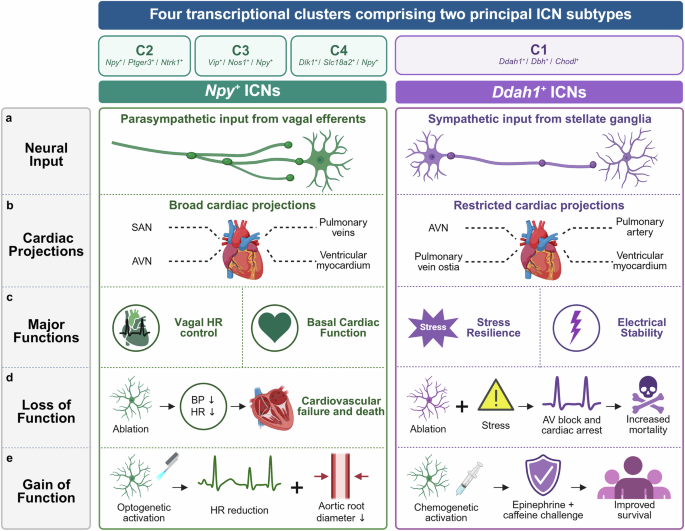
A new study published in Cell by researchers led by Xu and colleagues has identified two molecularly distinct types of intrinsic cardiac neurons (ICNs) that manage baseline heart activity and stability during physiological stress in mice. While the heart is widely known to be influenced by the central nervous system, it also houses its own local nervous network within atrial ganglia. The physiological significance of this local network's cellular diversity has remained largely unclear until now.
By integrating single-cell RNA sequencing, genetic labeling, and advanced imaging techniques, the research team discovered two major, non-overlapping neuronal populations marked by the genes Npy and Ddah1. The experiments revealed that Npy+ ICNs predominantly receive parasympathetic signals from the vagus nerve and help maintain resting heart rate and basal cardiovascular function. Conversely, Ddah1+ ICNs receive direct sympathetic inputs and act to prevent stress-induced arrhythmias, atrioventricular blocks, and dangerous progressions toward cardiac arrest.
When the investigators selectively ablated these neuronal groups in experimental models, the consequences were severe. Eliminating Npy+ ICNs led to a progressive decline in blood pressure and heart rate, ultimately resulting in fatal heart failure. Meanwhile, removing Ddah1+ ICNs drastically heightened vulnerability to arrhythmias and mortality under high-stress conditions like epinephrine and caffeine challenges. Because these findings stem from preclinical animal models, further research is necessary to determine how these mechanisms translate to human cardiac physiology.
What to know: Local neurons embedded directly within heart tissue play distinct, specialized roles in controlling resting heart rate and guarding against cardiac arrest during stress. Always consult a healthcare professional for guidance regarding personal heart health and medical conditions.
Source Nature Health Sciences — nature.com/articles/s41392-026-03060-1 ↗
Read next
 🏥Public Health
Preventive Services Task Force Resumes Meetings Under New Leadership
The U.S. Preventive Services Task Force is set to reconvene this week for the first time in over a year following a significant membership overhaul by Health Secretary Ro…
 🧠AI Analysis
Ultraprocessed Diets May Impact Brain Reward Systems in Younger Adults
A Virginia Tech study suggests that individuals aged 18 to 21 may experience changes in brain reward processing after consuming ultraprocessed foods, a response not obser…
 🧠Mind & Mental Health
Addressing Body Image and the Reality of Gluteal Anatomy
A personal reflection on the social and psychological impact of body shape, specifically regarding the gluteal region, and the limitations of consumer solutions for perce…
 🔬Research
CBD Oil Found Ineffective for Managing Behavioral Issues in Youths with Intellectual Disabilities
A double-blind clinical trial published in JAMA Pediatrics indicates that CBD oil provides no significant behavioral improvement for children and teenagers with intellect…
 🏃Fitness
Expert Advice on Hydration Gear Sparks Debate Among Recreational Runners
Olympic medalist Josh Kerr recently suggested that runners may not require hydration packs for distances under 12 miles, igniting a broader conversation about gear necess…
 🏃Fitness
A Structured Approach to Beginning a Strength and Cardio Routine
A new four-week training program offers beginners a guided path to incorporating strength training and cardiovascular exercise into their daily lives.