Analysis of 1,134 Patients Examines Bridging Therapy Prior to CAR T-Cell Treatment for Lymphoma
A large international retrospective study has evaluated the outcomes of bridging therapy in patients with relapsed or refractory large B-cell lymphoma receiving CD19-directed CAR T-cell therapy.
 🧠AI Analysis
Photo: Nature Health Sciences
Key points
- Retrospective analysis of 1,134 patients treated with commercial CD19 CAR T-cell therapy.
- About 79.5% of patients received bridging therapy due to more advanced baseline disease features.
- Patients without bridging therapy showed higher overall and progression-free survival rates.
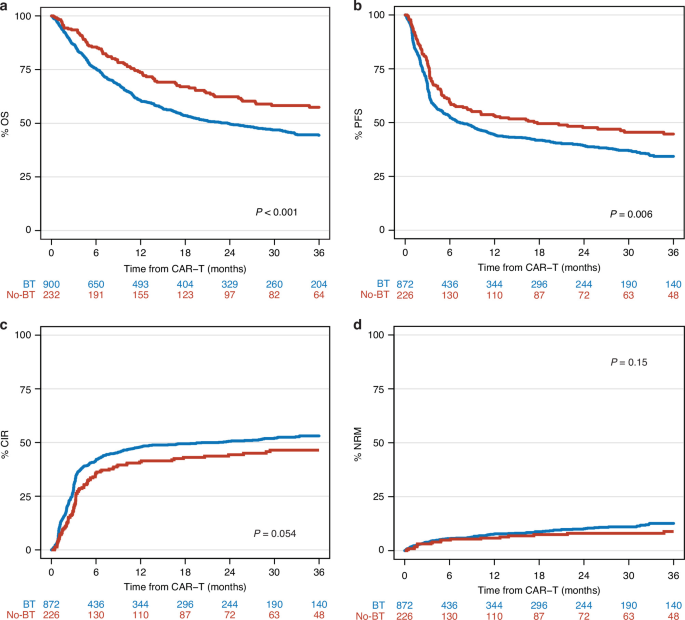
A comprehensive analysis conducted by the EBMT Lymphoma Working Party and the GoCART Coalition has investigated the role of bridging therapy for patients with relapsed or refractory large B-cell lymphoma. The study examined 1,134 patients treated with commercial CD19-directed CAR T-cell therapies, specifically axicabtagene ciloleucel or tisagenlecleucel, between September 2018 and July 2023 across 38 centers. Researchers sought to better understand how interim treatments administered between leukapheresis and lymphodepletion influence overall survival and progression-free survival.
Study Findings on Bridging Therapy Outcomes
Among the cohort, roughly 79.5% of individuals received some form of bridging therapy, while 20.5% did not. Patients who required bridging therapy frequently presented with more advanced disease characteristics at lymphodepletion, such as elevated lactate dehydrogenase, bulky disease, and higher ECOG performance status scores. Multivariable analysis indicated that patients who did not receive bridging therapy experienced superior overall survival and progression-free survival rates compared to those who did. Specifically, the three-year progression-free survival was 34.3% for the bridging group versus 44.7% for the non-bridging group, while overall survival reached 44.4% and 57.4%, respectively.
- Treatment modality: Bridging approaches included polatuzumab vedotin-bendamustine-rituximab, low-dose regimens, classical salvage chemo-immunotherapy, and radiotherapy.
- Disease response: Improving disease status between apheresis and lymphodepletion was linked to more favorable outcomes among bridging therapy recipients.
- Core takeaway: The specific type of bridging regimen did not significantly alter adjusted survival outcomes, suggesting that prioritizing disease control with minimal toxicity is key.
AI Analysis: This large-scale retrospective evaluation provides vital real-world context regarding the management of high-risk lymphoma patients awaiting cellular immunotherapy. While patients requiring bridging therapy inherently presented with more aggressive disease—explaining their comparatively lower survival metrics—the findings emphasize that successful disease stabilization before infusion can positively influence prognosis. These insights help guide clinical decision-making, though prospective trials remain essential to refine patient selection and sequencing.
What to know: Bridging therapy is often necessary to manage aggressive lymphoma while awaiting manufactured CAR T-cell products, but it is typically administered to higher-risk patients who face more challenging prognoses. Patients should consult their oncologists to discuss individualized treatment plans and the specific risks and benefits associated with cellular therapy protocols.
Source Nature Health Sciences — nature.com/articles/s41409-026-03074-x ↗
Read next
 🏃Fitness
Understanding and Addressing Love Handles Through Lifestyle Changes
Experts clarify that spot reduction of fat is not physiologically possible, recommending a combination of calorie management and high-intensity interval training instead.
 🏃Fitness
Ciele Releases New Woolmark-Certified Merino Winter Running Apparel
Montreal-based brand Ciele has launched its second collection of merino wool running gear, featuring performance-focused fabrics designed for cold-weather training.
 🏥Public Health
Preventive Services Task Force Resumes Meetings Under New Leadership
The U.S. Preventive Services Task Force is set to reconvene this week for the first time in over a year following a significant membership overhaul by Health Secretary Ro…
 ❤️Conditions & Care
Blood-Based Genetic Signature May Predict CAR T-Cell Therapy Success in Lymphoma
Researchers have identified a specific RNA signature in blood plasma that may help predict how well lymphoma patients respond to CAR T-cell therapy.
 🧠Mind & Mental Health
Addressing Body Image and the Reality of Gluteal Anatomy
A personal reflection on the social and psychological impact of body shape, specifically regarding the gluteal region, and the limitations of consumer solutions for perce…
 ❤️Conditions & Care
Migraine and Smoking Linked to Increased Early Stroke Risk in Women
A large-scale study suggests that people who have given birth and experience migraines while also smoking face a significantly higher risk of stroke before age 60.