Systematic Review Finds Insufficient Evidence to Support Platelet-Rich Fibrin for Preventing Jaw Necrosis After Radiotherapy
A recent systematic review published in Nature Health Sciences assessed whether platelet-rich fibrin helps prevent osteoradionecrosis in head and neck cancer patients. The analysis found current clinical data to be insufficient, highlighting significant limitations in existing trials.
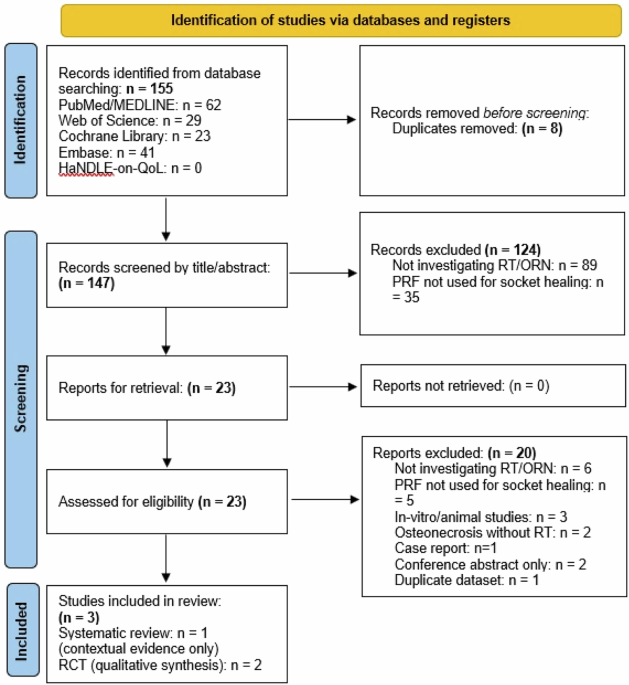 🧠AI Analysis
Photo: Nature Health Sciences
Key points
- Systematic review evaluated PRF for preventing osteoradionecrosis in head and neck cancer patients
- Current data from randomised trials show no statistically significant benefit over conventional care
- No studies currently investigate PRF in the crucial pre-radiotherapy timeframe
Researchers in a recent systematic review evaluated the use of platelet-rich fibrin (PRF) in dental extraction sockets for patients undergoing or planning to undergo head and neck radiotherapy. Osteoradionecrosis, a severe late complication of radiation therapy involving bone death in the jaw, often follows tooth extractions in treated areas. Because maximizing socket healing before radiation begins is vital to lowering this risk, investigators sought to determine whether PRF concentrates autologous growth factors enough to accelerate healing or reduce complication rates.
The systematic review examined databases including PubMed, Embase, and the Cochrane Library through December 2025. Out of the literature searched, only two randomised controlled trials met the criteria for qualitative synthesis, alongside one contextual systematic review with meta-analysis. Neither of the trials demonstrated a statistically significant benefit when comparing PRF to conventional socket management. Furthermore, both studies were noted to be substantially underpowered, carried a high risk of type II error, and examined only post-irradiated patients while administering antibiotics to all participants, which may have suppressed baseline event rates.
Current medical evidence remains insufficient to recommend routine PRF use for preventing osteoradionecrosis in this patient population. Investigators emphasized that no existing studies evaluate PRF in the pre-radiotherapy setting, which is clinically the most relevant scenario. Adequately powered, multicenter trials are necessary before clinical guidelines can change. What to know: While PRF is designed to encourage tissue regeneration, current data do not confirm its effectiveness in preventing jaw bone complications after radiation; patients should consult their oncologists and dental specialists for personalized care decisions.
Source Nature Health Sciences — nature.com/articles/s41405-026-00491-4 ↗
Read next
 🔬Research
JAK Inhibitor Shows Potential in Managing Immune Dysregulation in Down Syndrome
A phase 2 clinical trial indicates that the medication tofacitinib can safely reduce chronic immune overactivity in individuals with Down syndrome, leading to improvement…
 🏃Fitness
Understanding and Addressing Love Handles Through Lifestyle Changes
Experts clarify that spot reduction of fat is not physiologically possible, recommending a combination of calorie management and high-intensity interval training instead.
 🏃Fitness
Ciele Releases New Woolmark-Certified Merino Winter Running Apparel
Montreal-based brand Ciele has launched its second collection of merino wool running gear, featuring performance-focused fabrics designed for cold-weather training.
 🏥Public Health
Preventive Services Task Force Resumes Meetings Under New Leadership
The U.S. Preventive Services Task Force is set to reconvene this week for the first time in over a year following a significant membership overhaul by Health Secretary Ro…
 ❤️Conditions & Care
Blood-Based Genetic Signature May Predict CAR T-Cell Therapy Success in Lymphoma
Researchers have identified a specific RNA signature in blood plasma that may help predict how well lymphoma patients respond to CAR T-cell therapy.
 🧠Mind & Mental Health
Addressing Body Image and the Reality of Gluteal Anatomy
A personal reflection on the social and psychological impact of body shape, specifically regarding the gluteal region, and the limitations of consumer solutions for perce…