Plant-Derived Flavonoid Rutin Shows Potential for Reinforcing Dentin Collagen Without Causing Discoloration
A laboratory study published in Nature Health Sciences evaluated rutin extracted from Dimorphandra gardneriana as a potential dentin biomodifier.
 🧠AI Analysis
Photo: Nature Health Sciences
Key points
- Rutin extracted from Dimorphandra gardneriana was tested on human third molar specimens.
- Treated dentin samples showed significantly higher immediate tensile strength compared to control groups.
- Spectrophotometric analysis indicated no significant color changes resulting from the rutin treatments.
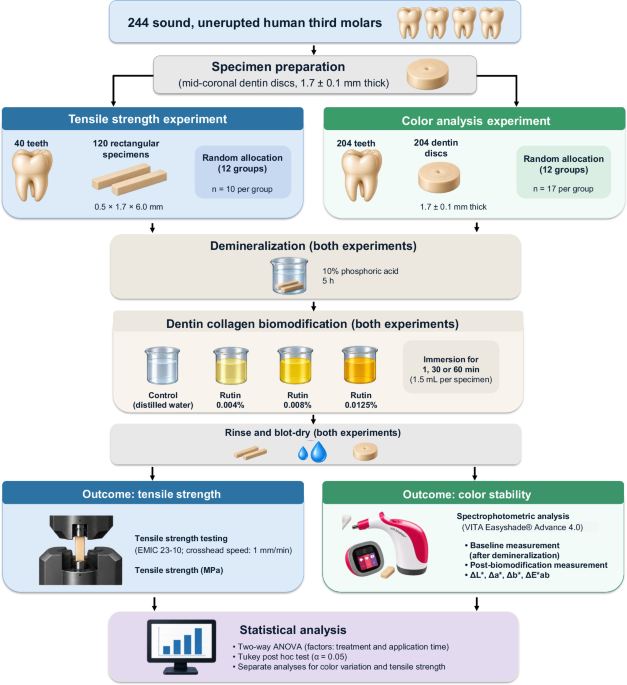
A recent laboratory study published in Nature Health Sciences investigated the effects of rutin, a flavonoid extracted from Dimorphandra gardneriana, on the mechanical and optical properties of demineralized dentin collagen. Researchers utilized 244 sound human third molars to prepare dentin discs and rectangular specimens, dividing them into multiple test groups to examine how aqueous rutin solutions of varying concentrations (0.004%, 0.008%, and 0.0125%) and exposure times (1, 30, or 60 minutes) affected tensile strength and color stability compared to a control group treated with distilled water.
According to the findings, specimens treated with rutin exhibited significantly higher immediate tensile strength than the control samples. However, varying the concentration of rutin or the duration of treatment did not produce further significant differences in tensile strength. Importantly, spectrophotometric analysis revealed no notable color changes across the evaluated parameters (ΔL*, Δa*, Δb*, and ΔE*ab) when comparing the rutin-treated groups to the baseline and control specimens.
While these in vitro results suggest that plant-derived polyphenols like rutin may help reinforce the dentin collagen matrix without causing unwanted optical alterations, the study's scope remains limited. Because the research was conducted entirely in a laboratory setting using extracted teeth, it does not account for complex physiological environments, long-term degradation factors, or actual clinical performance in human patients undergoing restorative dental procedures.
What to know: Rutin treatment increased the immediate tensile strength of demineralized dentin collagen in laboratory tests without altering its color. Readers should consult a qualified dental professional for advice regarding personal oral health treatments and restorative options.
Source Nature Health Sciences — nature.com/articles/s41405-026-00506-0 ↗
Read next
 🏃Fitness
Understanding and Addressing Love Handles Through Lifestyle Changes
Experts clarify that spot reduction of fat is not physiologically possible, recommending a combination of calorie management and high-intensity interval training instead.
 🏃Fitness
Ciele Releases New Woolmark-Certified Merino Winter Running Apparel
Montreal-based brand Ciele has launched its second collection of merino wool running gear, featuring performance-focused fabrics designed for cold-weather training.
 🏥Public Health
Preventive Services Task Force Resumes Meetings Under New Leadership
The U.S. Preventive Services Task Force is set to reconvene this week for the first time in over a year following a significant membership overhaul by Health Secretary Ro…
 ❤️Conditions & Care
Blood-Based Genetic Signature May Predict CAR T-Cell Therapy Success in Lymphoma
Researchers have identified a specific RNA signature in blood plasma that may help predict how well lymphoma patients respond to CAR T-cell therapy.
 🧠Mind & Mental Health
Addressing Body Image and the Reality of Gluteal Anatomy
A personal reflection on the social and psychological impact of body shape, specifically regarding the gluteal region, and the limitations of consumer solutions for perce…
 ❤️Conditions & Care
Migraine and Smoking Linked to Increased Early Stroke Risk in Women
A large-scale study suggests that people who have given birth and experience migraines while also smoking face a significantly higher risk of stroke before age 60.