Study Finds Mildly Reduced Alpha-1 Antitrypsin Levels Lack Link to Emphysema or Airflow Limitation
A large population-based study in Sweden indicates that mildly reduced serum alpha-1 antitrypsin levels are not independently associated with chronic airflow limitation or CT-defined emphysema.
 🧠AI Analysis
Photo: Nature Health Sciences
Key points
- Evaluated data from 24,931 participants aged 50–65 in the Swedish SCAPIS cohort.
- Found no independent link between mildly reduced AAT levels and chronic airflow limitation or emphysema.
- Mildly reduced AAT levels were associated with lower odds of certain respiratory symptoms.
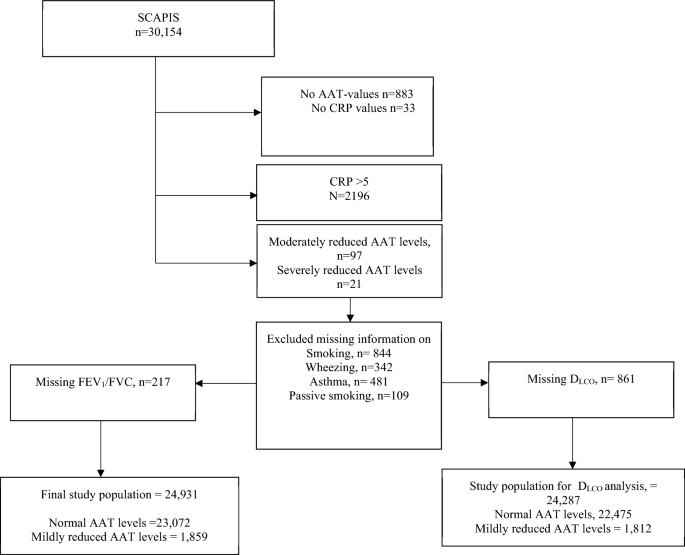
Researchers in Sweden have published findings from a large population-based cohort examining whether mildly reduced serum alpha-1 antitrypsin (AAT) concentrations pose a risk for chronic pulmonary conditions. While severe deficiency in AAT is a known genetic risk factor for chronic obstructive pulmonary disease and emphysema, the clinical implications of mildly reduced levels have remained unclear. Investigators utilized data from the Swedish CArdioPulmonary bioImage Study (SCAPIS), evaluating participants aged 50 to 65 years to understand how such levels relate to respiratory health and smoking.
Out of 24,931 individuals examined, 23,072 exhibited normal serum AAT concentrations, while 1,859 presented with mildly reduced levels. The researchers found no significant association between these mildly reduced concentrations and chronic airflow limitation, whether defined by standard GOLD criteria or the lower limit of normal, nor with emphysema detected via computed tomography scans. Interestingly, mildly reduced AAT levels even showed lower odds of certain reduced lung diffusion capacities and fewer respiratory symptoms compared to normal levels.
What to know: The authors suggest that mildly reduced AAT levels alone may not represent a major independent risk factor for airflow limitation or emphysema within the general population. Because this was an observational, cross-sectional evaluation relying on a specific age bracket, it has inherent design limits. Readers should consult a qualified healthcare provider for guidance regarding personal medical decisions and lung health assessments.
Source Nature Health Sciences — nature.com/articles/s41598-026-79511-0 ↗
Read next
 🏃Fitness
Understanding and Addressing Love Handles Through Lifestyle Changes
Experts clarify that spot reduction of fat is not physiologically possible, recommending a combination of calorie management and high-intensity interval training instead.
 🏃Fitness
Ciele Releases New Woolmark-Certified Merino Winter Running Apparel
Montreal-based brand Ciele has launched its second collection of merino wool running gear, featuring performance-focused fabrics designed for cold-weather training.
 🏥Public Health
Preventive Services Task Force Resumes Meetings Under New Leadership
The U.S. Preventive Services Task Force is set to reconvene this week for the first time in over a year following a significant membership overhaul by Health Secretary Ro…
 ❤️Conditions & Care
Blood-Based Genetic Signature May Predict CAR T-Cell Therapy Success in Lymphoma
Researchers have identified a specific RNA signature in blood plasma that may help predict how well lymphoma patients respond to CAR T-cell therapy.
 🧠Mind & Mental Health
Addressing Body Image and the Reality of Gluteal Anatomy
A personal reflection on the social and psychological impact of body shape, specifically regarding the gluteal region, and the limitations of consumer solutions for perce…
 ❤️Conditions & Care
Migraine and Smoking Linked to Increased Early Stroke Risk in Women
A large-scale study suggests that people who have given birth and experience migraines while also smoking face a significantly higher risk of stroke before age 60.