Documenting Pseudo-Exfoliative Deposition on Intraocular Lenses
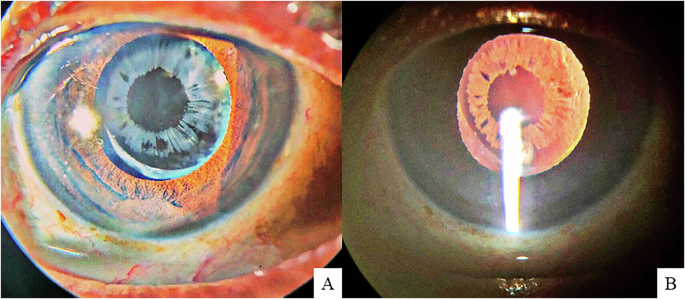
Researchers in India have published clinical observations detailing pseudo-exfoliative material deposits on posterior chamber intraocular lenses, referred to as the 'Ghost Iris' phenomenon.
 🧠AI Analysis
Photo: Nature Health Sciences
Key points
- Researchers detailed pseudo-exfoliative deposition on posterior chamber intraocular lenses.
- The clinical phenomenon was documented by ophthalmologists in New Delhi and Vadodara, India.
- The findings contribute to medical literature regarding post-surgical outcomes in exfoliation syndrome.
A recent clinical report published in the journal Eye by researchers from the Department of Ophthalmology at ESIC Hospital and PGIMSR in New Delhi, alongside specialists from Vadodara, details the visual findings of pseudo-exfoliative deposition on posterior chamber intraocular lenses. Authored by Omeshwer Koli and Shalin Shah, the paper outlines specific ocular manifestations where extracellular material accumulates following cataract surgery and lens implantation.
Pseudo-exfoliation syndrome is a generalized systemic condition characterized by the abnormal production and accumulation of fibrillar extracellular material in various ocular tissues. While frequently associated with glaucoma and complications during cataract procedures, observing these specific protein-like deposits on the surface of artificial intraocular lenses provides further clinical insight into how the condition interacts with surgical hardware over time.
What to know: Clinical descriptions such as this contribute to the broader understanding of post-surgical complications in patients with systemic exfoliation syndromes. As findings stem from observational clinical cases, readers experiencing ocular symptoms or managing chronic eye conditions should consult an ophthalmologist or healthcare provider for personalized medical guidance.
Source Nature Health Sciences — nature.com/articles/s41433-026-04824-3 ↗
Read next
 🏥Public Health
Preventive Services Task Force Resumes Meetings Under New Leadership
The U.S. Preventive Services Task Force is set to reconvene this week for the first time in over a year following a significant membership overhaul by Health Secretary Ro…
 ❤️Conditions & Care
Blood-Based Genetic Signature May Predict CAR T-Cell Therapy Success in Lymphoma
Researchers have identified a specific RNA signature in blood plasma that may help predict how well lymphoma patients respond to CAR T-cell therapy.
 🧠Mind & Mental Health
Addressing Body Image and the Reality of Gluteal Anatomy
A personal reflection on the social and psychological impact of body shape, specifically regarding the gluteal region, and the limitations of consumer solutions for perce…
 ❤️Conditions & Care
Migraine and Smoking Linked to Increased Early Stroke Risk in Women
A large-scale study suggests that people who have given birth and experience migraines while also smoking face a significantly higher risk of stroke before age 60.
 🔬Research
CBD Oil Found Ineffective for Managing Behavioral Issues in Youths with Intellectual Disabilities
A double-blind clinical trial published in JAMA Pediatrics indicates that CBD oil provides no significant behavioral improvement for children and teenagers with intellect…
 🏃Fitness
Expert Advice on Hydration Gear Sparks Debate Among Recreational Runners
Olympic medalist Josh Kerr recently suggested that runners may not require hydration packs for distances under 12 miles, igniting a broader conversation about gear necess…