Study Links Long-Term Lack of Social Activities to Central Obesity Risk in Aging Women
A prospective study using Canadian Longitudinal Study on Aging data suggests that a continuous lack of diverse social activities may increase the risk of central obesity in middle-aged and older women.
 🧠AI Analysis
Photo: Nature Health Sciences
Key points
- Analyzed data from the Canadian Longitudinal Study on Aging spanning 2011 to 2021.
- Tracked adults aged 45 and older to observe links between social ties and central obesity.
- Found that persistently low social participation was linked to higher central obesity odds in women.
Social Connections and Physical Health Explored
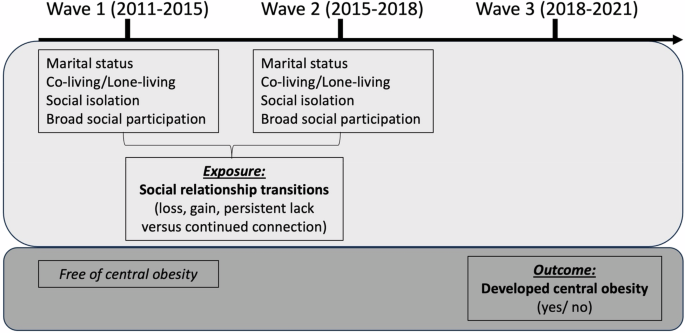
A recent prospective investigation published in Nature Health Sciences examined how disruptions or the continued absence of social ties influence the development of central obesity. Utilizing data from three waves of the Canadian Longitudinal Study on Aging spanning 2011 to 2021, researchers analyzed adults aged 45 and older. The study tracked variables such as marital status, living arrangements, social isolation, and social participation among participants who were initially free of central obesity.
The findings indicate that women experiencing a continued absence of diverse social participation—defined as engaging in fewer than five monthly activities—faced significantly higher odds of developing central obesity, with odds ratios around 1.20 to 1.22. The authors noted that metabolic consequences varied by gender, as other shifts in social ties presented mixed patterns across male and female subgroups. Because the investigation relies on observational data, it establishes a link rather than direct causation, and further study is required to understand the underlying mechanisms.
What to know: Chronically low social participation over a multi-year period may be linked to a higher likelihood of central obesity in aging women. Readers should consult a healthcare provider for personalized medical advice and health management decisions.
Source Nature Health Sciences — nature.com/articles/s41366-026-02249-2 ↗
Read next
 🧠Mind & Mental Health
Addressing Body Image and the Reality of Gluteal Anatomy
A personal reflection on the social and psychological impact of body shape, specifically regarding the gluteal region, and the limitations of consumer solutions for perce…
 ❤️Conditions & Care
Migraine and Smoking Linked to Increased Early Stroke Risk in Women
A large-scale study suggests that people who have given birth and experience migraines while also smoking face a significantly higher risk of stroke before age 60.
 🔬Research
CBD Oil Found Ineffective for Managing Behavioral Issues in Youths with Intellectual Disabilities
A double-blind clinical trial published in JAMA Pediatrics indicates that CBD oil provides no significant behavioral improvement for children and teenagers with intellect…
 🏃Fitness
Expert Advice on Hydration Gear Sparks Debate Among Recreational Runners
Olympic medalist Josh Kerr recently suggested that runners may not require hydration packs for distances under 12 miles, igniting a broader conversation about gear necess…
 🏃Fitness
A Structured Approach to Beginning a Strength and Cardio Routine
A new four-week training program offers beginners a guided path to incorporating strength training and cardiovascular exercise into their daily lives.
 🧠Mind & Mental Health
The Role of Daily Mobility Training in Managing Sedentary Tension
A two-week personal trial suggests that incorporating short, daily mobility exercises may help alleviate stiffness associated with sedentary desk work. Experts note that …