Artificial Intelligence Automatically Detects Stress Urinary Incontinence from Ultrasound Videos
Researchers have successfully tested deep learning models capable of identifying stress urinary incontinence from transperineal ultrasound videos without requiring manual frame selection.
 🧠AI Analysis
Photo: Nature Health Sciences
Key points
- Deep learning models analyzed 803 transperineal ultrasound recordings.
- The V-JEPA2 foundation model achieved AUC values between 0.89 and 0.90.
- Automated detection eliminates the need for manual frame selection.
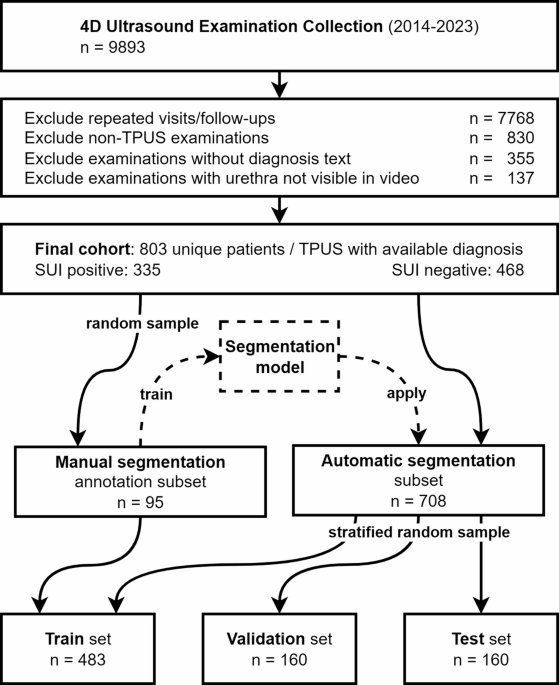
A team of researchers at University Hospital Aachen in Germany has demonstrated that deep learning technology can automatically detect stress urinary incontinence (SUI) from transperineal ultrasound video examinations. Published in Nature Health Sciences, the retrospective study analyzed 803 patient recordings to evaluate whether automated video classification pipelines could accurately diagnose the common bladder dysfunction without the need for manual frame or region-of-interest selection.
The study evaluated two distinct video-classification architectures: an ultrasound-pretrained frame-wise encoder paired with transformer-based temporal aggregation, and a video-native foundation model known as V-JEPA2. According to the findings, both model families demonstrated strong discriminative performance, with mean area under the receiver operating characteristic curve values ranging from 0.84 to 0.90. The video-native foundation model achieved slightly higher performance in basic configuration comparisons, while anatomically guided input variants showed comparable results.
What to know: While these findings suggest that automated ultrasound analysis may eventually serve as a reliable clinical decision-support tool, the research was based on a single-center retrospective dataset. Patients concerned about urinary health should consult a qualified healthcare provider for personal diagnosis and medical advice.
Source Nature Health Sciences — nature.com/articles/s41598-026-77927-2 ↗
Read next
 🏥Public Health
Preventive Services Task Force Resumes Meetings Under New Leadership
The U.S. Preventive Services Task Force is set to reconvene this week for the first time in over a year following a significant membership overhaul by Health Secretary Ro…
 ❤️Conditions & Care
Blood-Based Genetic Signature May Predict CAR T-Cell Therapy Success in Lymphoma
Researchers have identified a specific RNA signature in blood plasma that may help predict how well lymphoma patients respond to CAR T-cell therapy.
 🧠Mind & Mental Health
Addressing Body Image and the Reality of Gluteal Anatomy
A personal reflection on the social and psychological impact of body shape, specifically regarding the gluteal region, and the limitations of consumer solutions for perce…
 ❤️Conditions & Care
Migraine and Smoking Linked to Increased Early Stroke Risk in Women
A large-scale study suggests that people who have given birth and experience migraines while also smoking face a significantly higher risk of stroke before age 60.
 🔬Research
CBD Oil Found Ineffective for Managing Behavioral Issues in Youths with Intellectual Disabilities
A double-blind clinical trial published in JAMA Pediatrics indicates that CBD oil provides no significant behavioral improvement for children and teenagers with intellect…
 🏃Fitness
Expert Advice on Hydration Gear Sparks Debate Among Recreational Runners
Olympic medalist Josh Kerr recently suggested that runners may not require hydration packs for distances under 12 miles, igniting a broader conversation about gear necess…