Non-Neuronal Brain Cells Found to Regulate Fear Memory Retrieval
New research identifies a specific signaling pathway in astrocytes that is essential for recalling fear-related memories and maintaining neuronal structure.
 🧠AI Analysis
Photo: Nature Health Sciences
Key points
- Astrocytes in the hippocampus are essential for the retrieval of fear-related memories.
- The enzyme ADCY8 regulates neuronal structure and activity through a signaling chain involving VEGFA.
- Restoring VEGFA levels was shown to reverse memory deficits in laboratory models.
The Role of Astrocytes in Memory Retrieval
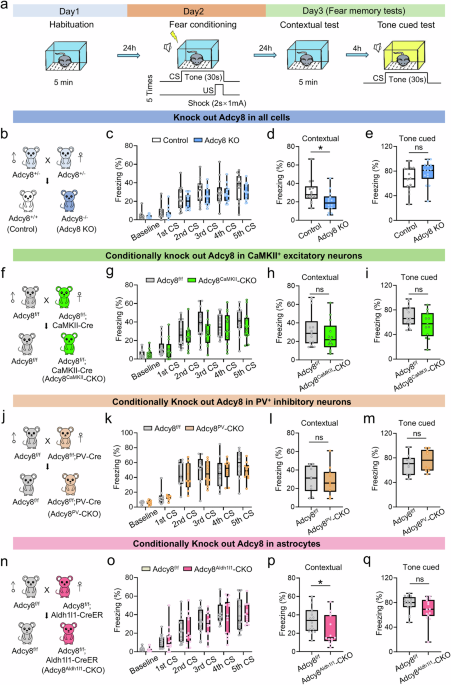
A study published in Nature Health Sciences has found that astrocytes, a type of star-shaped support cell in the brain, are the primary regulators of contextual fear memory retrieval. Researchers determined that an enzyme called adenylate cyclase 8 (ADCY8) within these astrocytes, rather than in neighboring neurons, is the key driver for recalling frightening experiences linked to specific environments.
These findings suggest that the brain's ability to process trauma relies heavily on non-neuronal support systems. However, the study is in its early stages and relied on single-nucleus RNA sequencing and genetic modifications in animal models. Because the research focused on the ventral hippocampus of mice, further clinical trials are necessary to determine if the same biological signaling occurs in the human brain.
The research identified a specific molecular chain known as the ADCY8-MAPK-VEGFA axis. When ADCY8 was absent, the production of vascular endothelial growth factor A (VEGFA) dropped, leading to stunted neuron growth and memory failure. Conversely, increasing VEGFA levels successfully restored memory function and normalized neuronal activity, highlighting a potential therapeutic pathway for stress-related disorders.
What to know: This study identifies a new role for astrocytes in cognitive health and the physical structure of the brain. While it offers insight into the mechanisms of memory, patients should consult a medical professional for the management of PTSD or other mental health conditions.
Source Nature Health Sciences — nature.com/articles/s41418-026-01899-z ↗
Read next
 🏥Public Health
Preventive Services Task Force Resumes Meetings Under New Leadership
The U.S. Preventive Services Task Force is set to reconvene this week for the first time in over a year following a significant membership overhaul by Health Secretary Ro…
 ❤️Conditions & Care
Blood-Based Genetic Signature May Predict CAR T-Cell Therapy Success in Lymphoma
Researchers have identified a specific RNA signature in blood plasma that may help predict how well lymphoma patients respond to CAR T-cell therapy.
 🧠Mind & Mental Health
Addressing Body Image and the Reality of Gluteal Anatomy
A personal reflection on the social and psychological impact of body shape, specifically regarding the gluteal region, and the limitations of consumer solutions for perce…
 ❤️Conditions & Care
Migraine and Smoking Linked to Increased Early Stroke Risk in Women
A large-scale study suggests that people who have given birth and experience migraines while also smoking face a significantly higher risk of stroke before age 60.
 🔬Research
CBD Oil Found Ineffective for Managing Behavioral Issues in Youths with Intellectual Disabilities
A double-blind clinical trial published in JAMA Pediatrics indicates that CBD oil provides no significant behavioral improvement for children and teenagers with intellect…
 🏃Fitness
Expert Advice on Hydration Gear Sparks Debate Among Recreational Runners
Olympic medalist Josh Kerr recently suggested that runners may not require hydration packs for distances under 12 miles, igniting a broader conversation about gear necess…